
Reviewed · ACATENANGO VOLCANO HIKES
Antigua, Guatemala: Volcano Acatenango Overnight Hiking
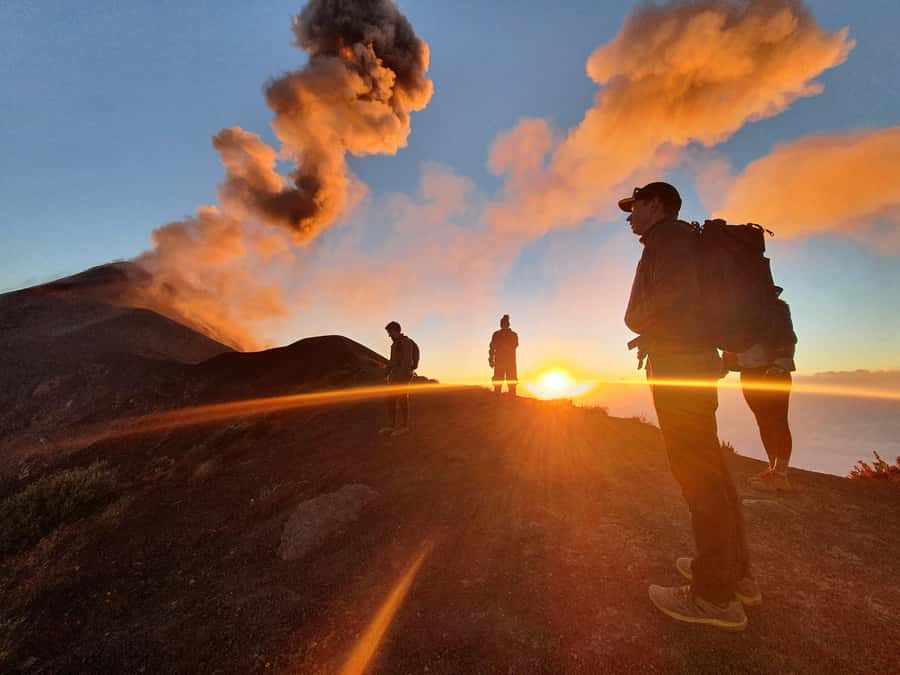
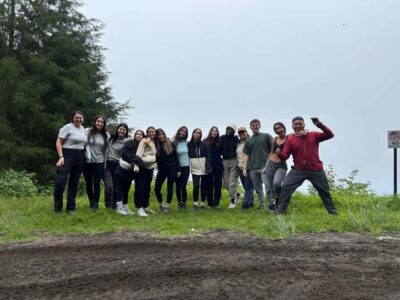
Acatenango is not a gentle walk with a volcano at the end. It is a steep, cold, two-day mountain test that rewards you with a front-row view of Fuego’s eruptions, a sunset above Guatemala, and a sunrise from the summit. I like the small-group feel, often around 6 to 13 people, and the guides’ patient pacing, especially names such as Christian, Alex, Luis, Adam, and José, who have helped slower hikers keep going without pressure.
I also like the high base camp, set at about 3,700 meters with views toward Fuego, plus hot meals, chocolate, a fire, mattress, and sleeping bag. The catch is simple: this is a hard hike. Cold, altitude, loose volcanic grit, and a long uphill climb can turn the trip into a serious physical challenge, so you should prepare rather than treat it as an ordinary day excursion.
Key points before you book
- A five to seven-hour uphill climb: The route is steep for much of the way, with loose, dusty sections that can make the first part especially tiring.
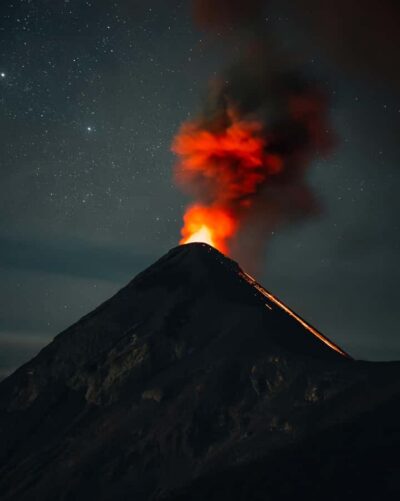
- Fuego from the cabin: The base camp has a clear view of Volcán de Fuego, and you may see lava glow or eruptions after dark.
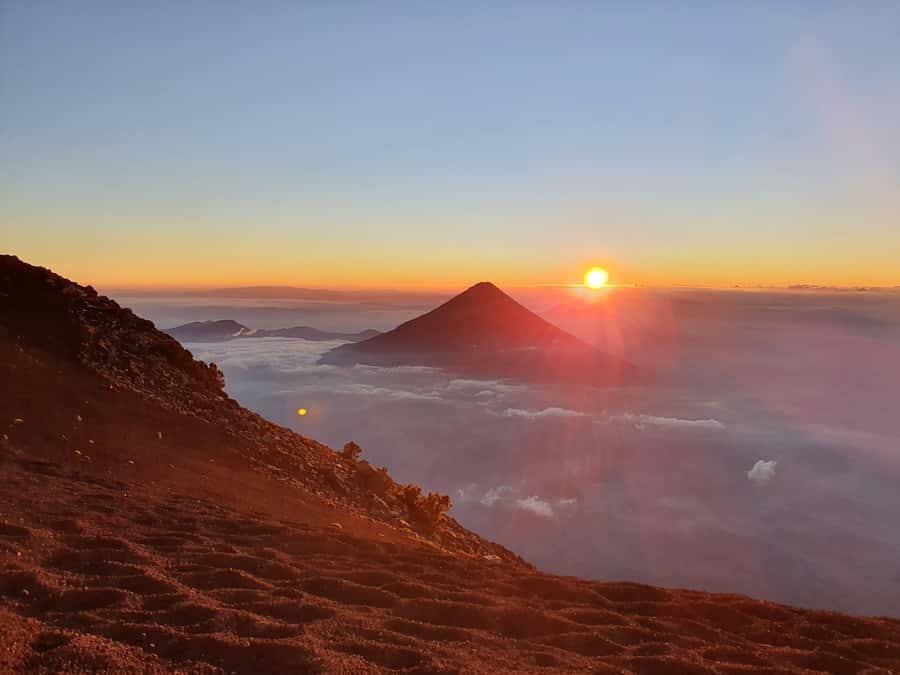
- Sunrise is included: The early climb to the summit is tough, but it gives you a chance to see the mountains and valleys in the first light.
- Basic but useful shelter: A-frame cabins, sleeping bags, mattresses, and hot drinks make the night more manageable, though this is still mountain camping.
- Good food for a hard trek: Lunch, dinner, and breakfast are included, with generous portions and vegetarian meals available if arranged ahead of time.
- Budget for extras: Bring water, Q100 for the entry fee, cash for rentals, and possibly another fee if you add the optional Fuego hike.
Why Acatenango is worth the effort
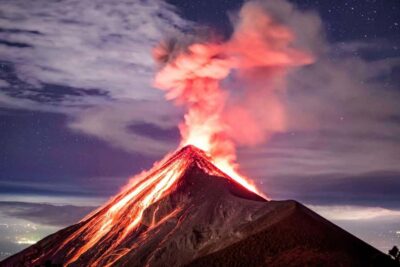
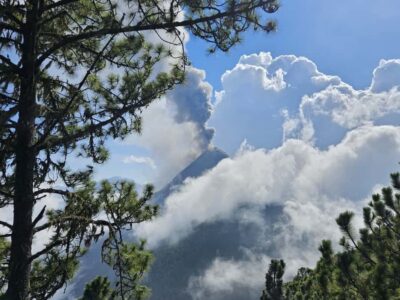
The special thing here is not simply reaching a summit. It is spending the night beside an active volcano and watching Fuego work in the darkness. From the base camp, you may see a red glow, a burst of lava, or a plume rising into the night. The view changes by the minute, and even a quiet spell gives you the strange pleasure of sitting beside a smoking volcano with a cup of hot chocolate.
Acatenango itself is dormant, but its high slopes give you a grand view of Guatemala’s mountains and valleys. The route crosses several kinds of volcanic ground, from dusty and unstable stretches to rockier sections near the upper slopes. You are not just walking through pretty countryside. You are watching vegetation give way to an exposed volcanic world.
The tour costs $90 per person. For a two-day trip with transportation from Antigua, a professional guide, three meals, hot drinks, a sleeping bag, mattress, and cabin, that is a fair price. The value is strongest if you already have proper hiking clothes and boots. Rental costs can add up, and the Q100 park entry fee is not included.
More acatenango volcano hikes in Antigua Guatemala:
- From Antigua: Adventure, 2-Day Hiking to Acatenango Volcano
★ 4.4 · 1,189 reviews - Overnight Adventure Hike Acatenango Volcano
★ 4.5 · 151 reviews - Antigua: 2-Day Acatenango Volcano Hike w/Local Guide & Meals
★ 4.3 · 43 reviews
Meeting in Antigua and reaching the trailhead
You meet at Tanque La Unión on 6a Calle Oriente in Antigua Guatemala. The group then travels by round-trip transport toward the trailhead and the village of La Soledad. The journey takes about an hour, according to the practical timing supplied by people who took the trip.
This early transfer is useful because it removes the need to arrange a separate taxi or shuttle to the mountain. It also gives the guide a chance to explain the route, check equipment, and set expectations before you start walking.
Allow extra patience at the beginning. Equipment fitting, meals, and group organization can take time, and a few departures have started later than expected because of confusion over rentals or food requests. That is not a serious flaw, but it is worth knowing if you have a tightly packed Antigua schedule.
You may leave larger luggage in storage with the company while hiking, though you should confirm the arrangement before departure. You will need to provide your passport number when booking.
The climb from La Soledad
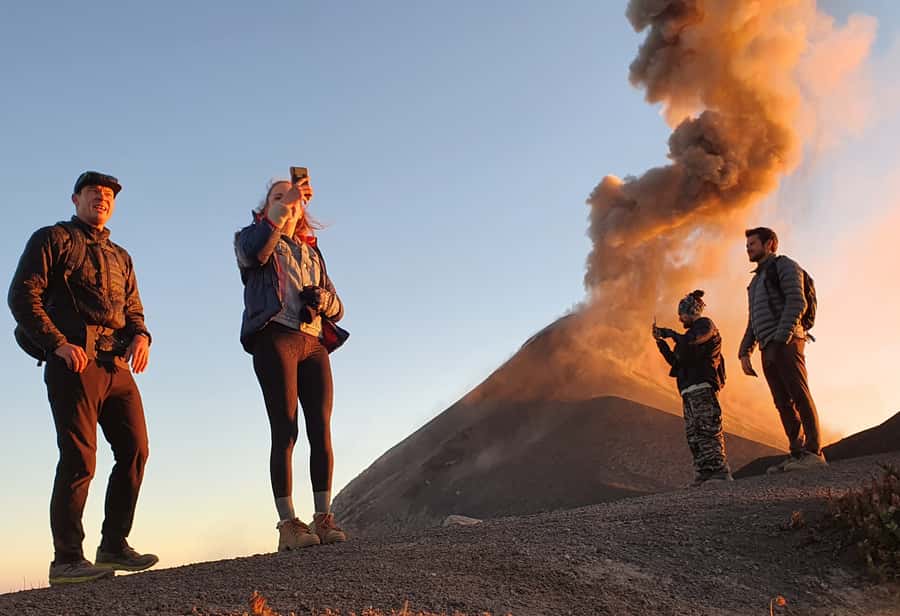
The hike begins at La Soledad and rises steadily toward Acatenango. This is the part that tests your legs. The route is often described as roughly four miles to base camp, with the ascent taking about five to seven hours depending on weather, pace, and group fitness.
The opening section is especially dusty and steep. A bandana or scarf helps keep grit out of your mouth, and hiking poles are more than a nice extra. They help with balance on loose ground and reduce strain on your knees during the descent. If you rent poles, two are better than one for this route.
Your lunch is carried during the climb. The included meal is grilled chicken with mashed potatoes and green salad. It is a filling break, not a light snack, and the portions are designed for a day when your body is working hard.
There are small places along parts of the route where you might buy drinks or snacks. Still, carry enough food to avoid relying on them. Several people found that extra snacks, protein bars, electrolytes, and magnesium were useful. Plan on at least 2.5 to 3 liters of water, and bring more if you know you drink heavily during exercise.
The guide team is one of the strongest parts of this outing. In smaller groups, two guides can split the pace, allowing stronger hikers to continue while someone stays with people who need more breaks. Guides including Christian, Francisco, Javier, Luis, Miguel, Alex, Adam, and José have been singled out for being encouraging and attentive, but the practical point is more important than any one name: tell your guide early if you are struggling.
Do not confuse steady pacing with an easy route. The mountain keeps rising, and altitude can affect you even if you are fit at home. People arriving from sea level have reported feeling fine lower down and then developing symptoms near the top. Listen to your body, slow down, and tell the guide about headaches, nausea, dizziness, or unusual weakness.
Base camp at 3,700 meters
The camp sits high on Acatenango, in front of Fuego. Its position is a major advantage. You get a close view of the active volcano without needing to add another long hike, and the early morning walk to the sunrise point is shorter than it would be from a lower camp.
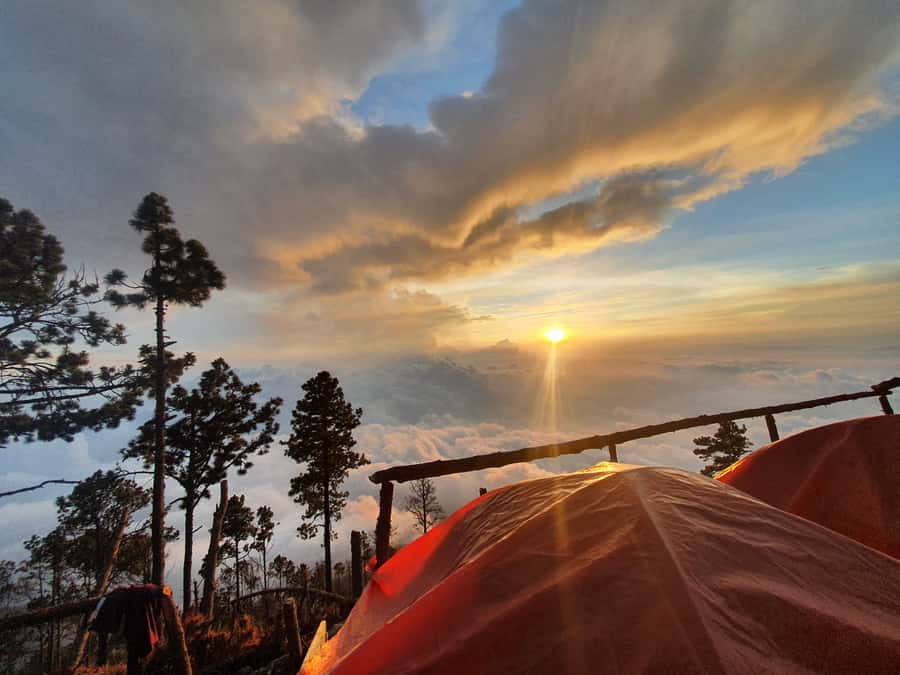
The shelters are simple A-frame cabins rather than tents. Depending on group size, you might share a cabin with three, four, five, or more people. Sleeping arrangements use mattresses on the floor, with a sleeping bag supplied. The setup is basic, but it protects you from the wind and gives you a proper place to lie down after the climb.
Night temperatures are the part many people underestimate. The cabin can feel comfortable once everyone is inside and the sleeping bags are arranged, but the period around sunset is bitterly cold. Bring a warm jacket, gloves, beanie, hiking pants, and several layers. One person reported staying comfortable with two layers of trousers, three tops, a down jacket, and a sleeping bag.
The supplied sleeping bags may not close fully, so do not assume one bag will replace warm clothing. A sleeping bag liner and your own pillowcase improve comfort and cleanliness. The mattresses are generally considered thick enough for a basic mountain camp, but you should not expect hotel bedding.
The toilet is a hole in the ground, with no toilet paper or hand-washing station. Pack toilet paper, hand sanitizer, and wipes in an easy-to-reach pocket. This is a small detail, but it matters a great deal at 3,700 meters.
A few more Antigua Guatemala trips to weigh up
- From Antigua: Pacaya Volcano Trek
★ 4.4 · 798 reviews - Hike to Pacaya Volcano from Antigua
★ 4.5 · 502 reviews - From Antigua: Pacaya Volcano Day Hike
★ 4.8 · 27 reviews - 1 Day Acatenango Volcano Hike from Antigua
★ 4.8 · 12 reviews
Sunset, fire, and Volcán de Fuego
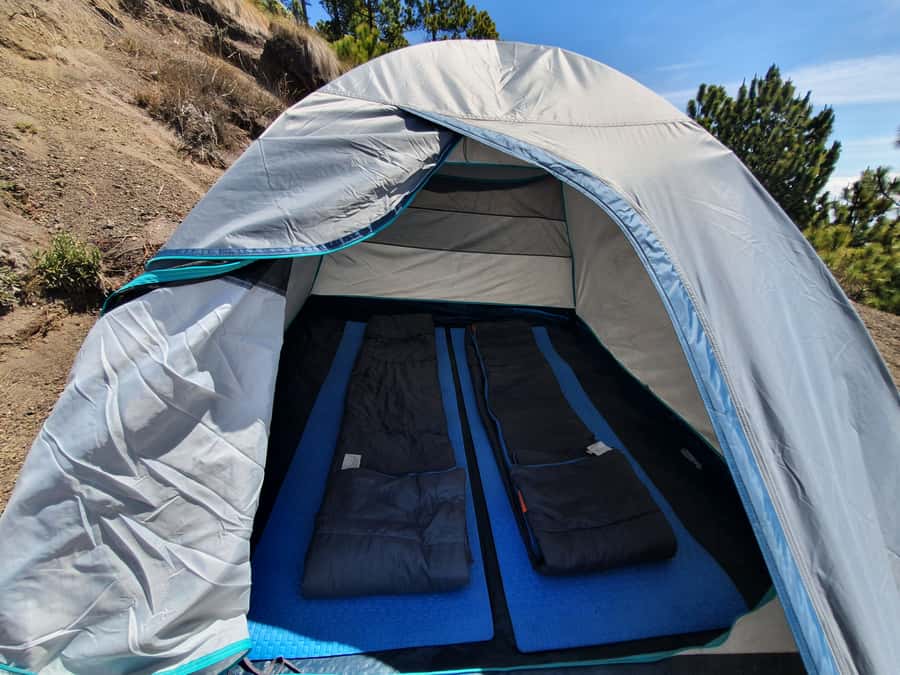
After reaching camp, you can watch the sun fall across the surrounding mountains. The colors are often less predictable than the brochures suggest, since cloud and weather control the view, but the setting is powerful even without a perfect sunset.
The guides prepare dinner, listed as chop suey with rice, and serve hot chocolate. A fire and marshmallows add welcome comfort after the climb. The food is not restaurant cooking, but it is hot, filling, and well suited to the conditions. Breakfast the next morning includes oatmeal, pancakes, and banana.
From the cabins, you may watch Fuego erupt while lying on your mattress. That is one of the best reasons to choose this particular base camp. You do not need to hike farther to have a memorable volcano view.
There is also an optional Fuego hike. It is much more demanding than the main route, adding roughly three to four hours according to the supplied trip accounts, and it requires another climb back toward camp. The extra charge has been reported at around Q200 to Q300, so confirm the current price before setting out.
I would add Fuego only if you still feel strong after reaching base camp. The closer view can be spectacular, especially near sunset, but altitude and fatigue change the calculation. If clouds hide the volcano, the extra effort may not offer much. From the main camp, you can still see Fuego well on a clear night.
The pre-dawn push for sunrise
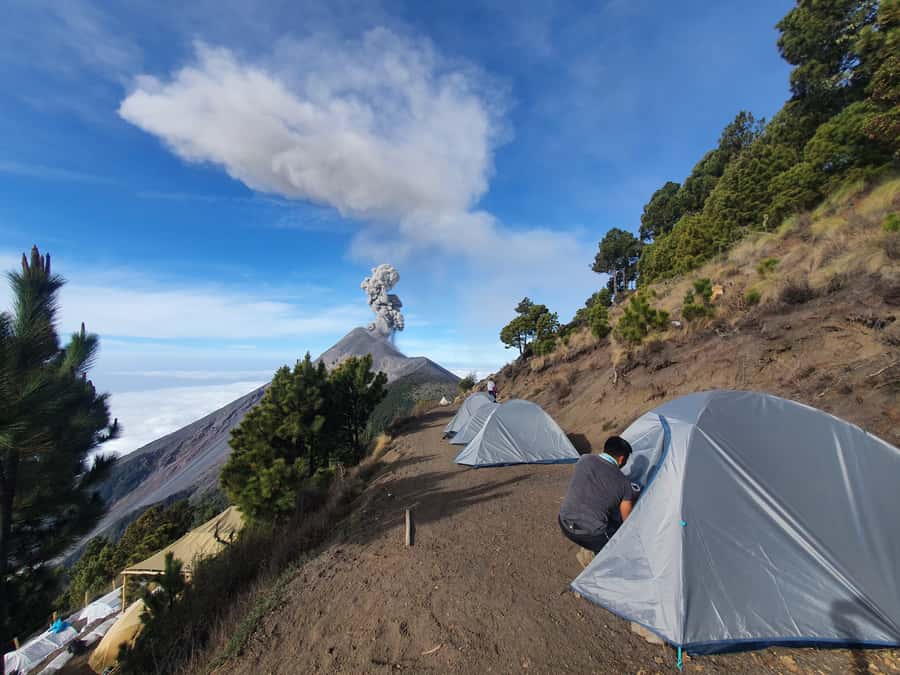
The included sunrise walk starts very early, often around 4:30 or 5 a.m. This is the coldest and hardest section for many people. You will need a flashlight or headlamp, warm layers, gloves, and sturdy footwear.
The climb is short compared with the previous day, but it feels serious after several hours on the mountain. Some people who were affected by altitude sickness chose to skip the summit walk and stayed at camp. That is a sensible choice, not a failure. You can still have a fine view of Fuego from the cabins.
If conditions cooperate, sunrise is the emotional high point of the trip. Acatenango’s height opens the view across Guatemala’s mountains and valleys, and the changing light makes the volcanic ground look almost otherworldly. The reward comes from the timing as much as the scenery: you are watching day arrive from a high volcanic ridge after sleeping beside an active cone.
After sunrise, you return to base camp for breakfast. Eat well, refill your water, and repack carefully. The descent is easier on your lungs but can be hard on knees and ankles, especially on loose ash. Hiking poles are particularly useful here.
Returning to La Soledad
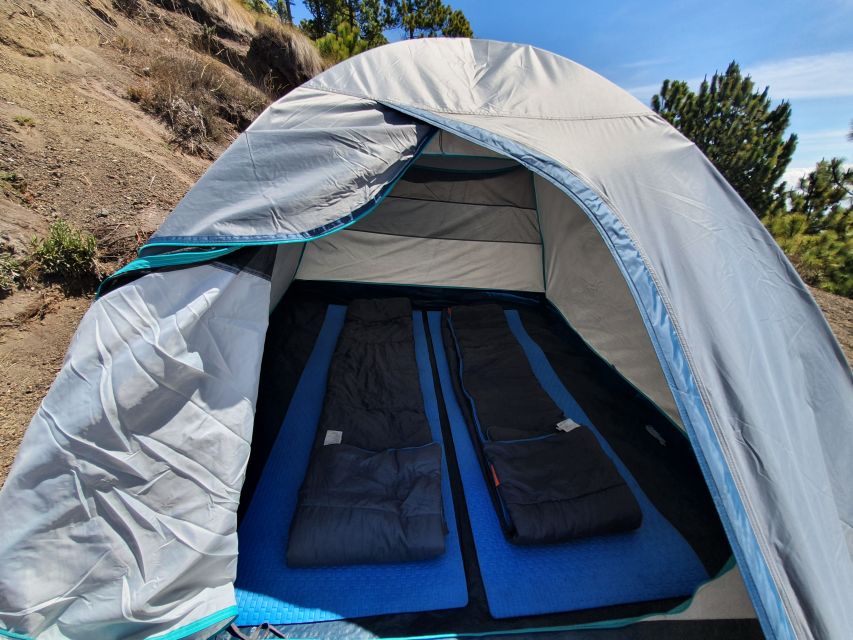
Once breakfast is finished, you pack up and begin the walk back to La Soledad. The return usually takes about two to three hours, though weather and footing can change that.
The downhill route is not a free pass. Loose sections can send your feet sliding, and tired legs make falls more likely. Keep your pace controlled, use poles, and avoid racing ahead of the group. The guides continue to watch the slower walkers, which is helpful when fatigue sets in.
At La Soledad, you board transport back to Antigua. The round-trip ride is included, so the trip ends where it began rather than leaving you to find your own way down from the trailhead.
What to bring, rent, and leave behind
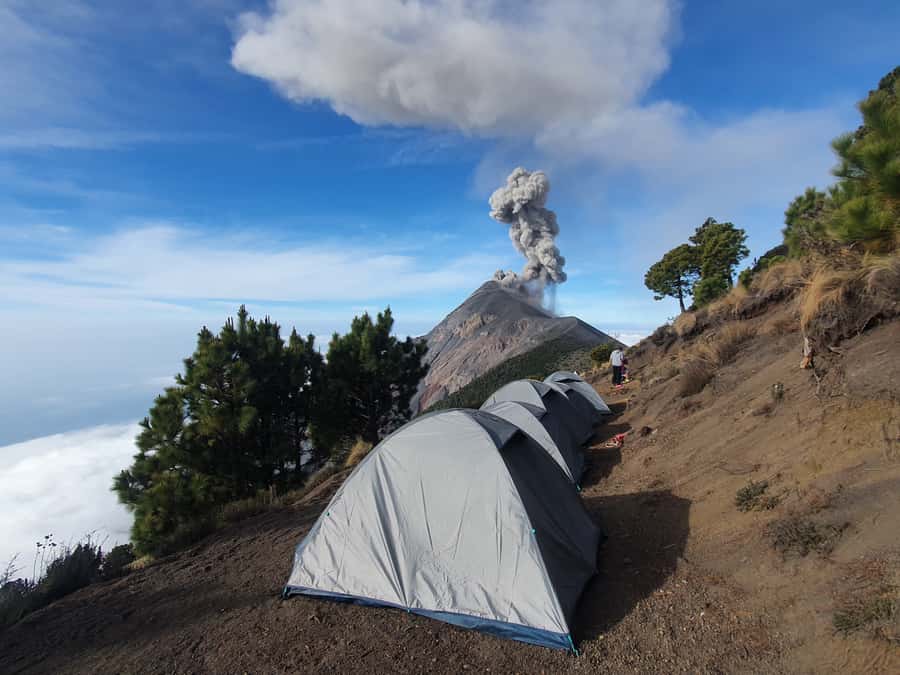
Bring your own gear if you can. The company can rent jackets, boots, gloves, hats, scarves, backpacks, headlamps, and poles, but sizes and condition may vary. Some people found rental shoes too large or too small, and warm jackets may not fit every body shape.
Your essential packing list is:
- Hiking boots with real grip
- Two hiking poles
- Three liters of water
- Electrolytes and high-energy snacks
- Warm jacket, gloves, beanie, and spare layers
- Rain protection
- Hiking pants
- Headlamp or flashlight
- Toilet paper and hand wipes
- Cash for the Q100 entry fee and possible extras
- Sleeping bag liner or pillowcase
- Bandana or scarf for dust
Avoid sandals and flip flops. Smoking indoors, alcohol, drugs, pets, and speakers are not allowed. Keep your pack light because you carry your own water, food, and clothing uphill. If needed, you can ask about hiring a horse or person to carry your bag.
Vegetarian meals can be arranged, but request them through WhatsApp before the hike. Do not wait until departure morning. Bring a rain layer even in a dry period, since mountain weather can turn quickly.
Fitness, altitude, and who should skip it
You do not need to be an elite mountaineer, but you should be in good physical condition. The route is a constant incline with steep sections, sandy footing, cold air, and high altitude. Training on stairs or a stair stepper for 30 minutes a day for a few weeks is a practical way to prepare.
This trip is not suitable for people with back or heart problems, epilepsy, or a stated tendency toward seasickness. The operator also lists a maximum weight of 254 pounds, or 115 kilograms.
The best preparation is not only stronger legs. Practice carrying a loaded backpack, break in your boots, and learn how much water and food you need. You will enjoy the mountain more if you arrive ready to walk slowly for several hours.
Is the $90 price good value?
Yes, if you already own the main equipment. The $90 includes transport, a professional Spanish or English-speaking guide, lunch, dinner, breakfast, hot chocolate, sleeping gear, and the A-frame cabin. Three hot meals alone are valuable on a difficult overnight climb.
The price becomes less attractive if you need to rent several items. Add the Q100 entry fee, water, snacks, and possible Fuego or sunset add-ons. Gear rental can be reasonable for one or two pieces, but a full set of boots, jacket, gloves, poles, and headlamp may change the total.
The small groups help justify the cost. Groups of around 10 to 13 people offer a more personal pace than the large groups of 30 or 40 seen on the mountain. Smaller departures are also useful when fitness levels vary, since guides can keep people supported without turning the whole climb into a race.
Free cancellation up to 24 hours before departure and reserve-now, pay-later booking make the commitment easier. Still, check the weather before you go. Cloud can block Fuego and sunrise, especially in the rainy season, even though the hike remains worthwhile as a physical challenge.
Should you book this Acatenango overnight hike?
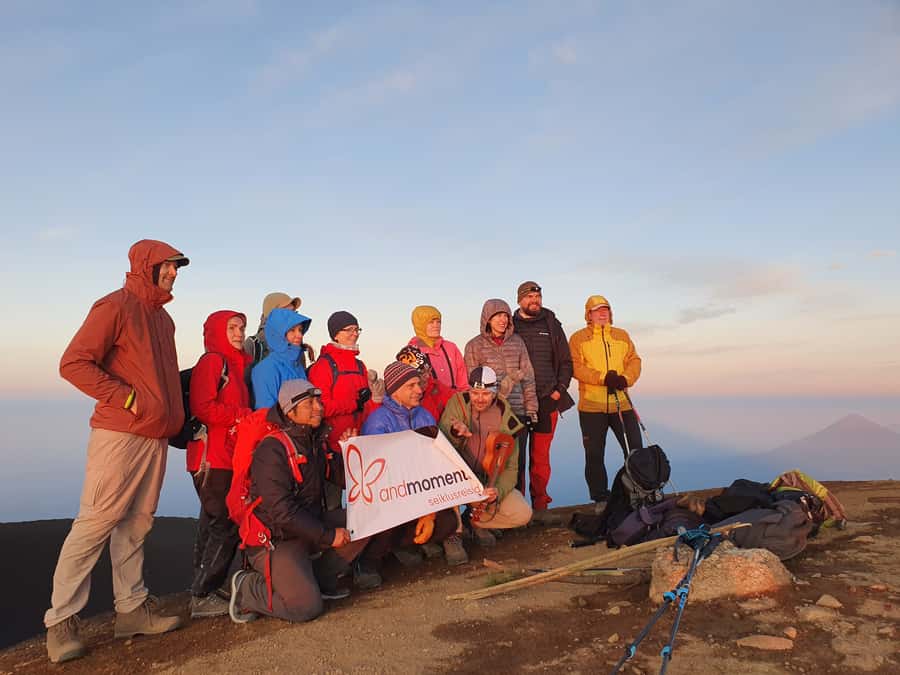
Book it if you want a demanding mountain adventure, can handle several hours of steep uphill walking, and like the idea of sleeping in a basic cabin beside an active volcano. The combination of a high camp, hot food, supportive guides, Fuego views, and sunrise makes the $90 starting price attractive.
Think twice if you dislike cold nights, shared sleeping spaces, rough toilets, dusty trails, or carrying a heavy pack. You should also avoid adding the Fuego hike simply because other people in your group are doing it.
For the best chance of enjoying it, bring your own boots and warm layers, rent two poles if needed, carry three liters of water plus snacks, and tell the guide the moment altitude or fatigue becomes a problem. If you accept the physical cost, Acatenango can be one of Guatemala’s strongest outdoor experiences.
FAQ
How long is the Acatenango overnight hike?
The activity lasts two days. The climb to base camp generally takes about five to seven hours, the early sunrise walk begins around 4:30 or 5 a.m., and the descent to La Soledad usually takes two to three hours.
What meals are included?
Lunch includes grilled chicken, mashed potatoes, and green salad. Dinner is chop suey with rice, and breakfast includes oatmeal, pancakes, and banana. Hot chocolate is also provided. Vegetarian meals can be arranged by WhatsApp in advance.
Is the entry fee included in the $90 price?
No. You need to pay an additional entry fee of Q100 per person. Bring cash because water, snacks, gear rental, and optional hikes are also not included.
What sleeping arrangements are provided?
You sleep in an A-frame cabin at about 3,700 meters. The cabins contain mattresses, and the tour provides a sleeping bag. Cabin sharing depends on group size and may involve several people in one shelter.
Can I rent hiking equipment?
Yes. You can ask about renting items such as hiking poles, jackets, boots, gloves, hats, scarves, backpacks, and headlamps. Availability and sizing can vary, so bringing your own well-fitting boots and warm clothing is preferable when possible.
Where do I meet the guide?
The meeting point is Tanque La Unión, 6a Calle Oriente, in Antigua Guatemala. The tour provides round-trip transportation to and from the trailhead, and guides speak Spanish and English.
Just added around Antigua Guatemala
- Tour hacia Hobbitenango en quad★ 4.9 · 11 reviews
- Hobbitenango & Antigua Shared Day Tour★ 5.0 · 4 reviews
- Sky high ATV adventure★ 4.7 · 19 reviews
- One-day tour from Antigua to Lake Atitlán★ 4.6 · 5 reviews
- From Antigua to Sumpango Giant Kite Festival★ 4.2 · 7 reviews
- From Antigua Guatemala: Birdwatching and Scenic Hiking Tour★ 4.2 · 9 reviews
- From Antigua: 2-Day Tour of Chichicastenango & Lake Atitlan★ 3.4 · 7 reviews
- From Guatemala City, Tour to Antigua Guatemala★ 4.5 · 3 reviews
Acatenango Volcano Hikes, compared.
Adventure, 2-Day Hiking to Acatenango Volcano
Read our review →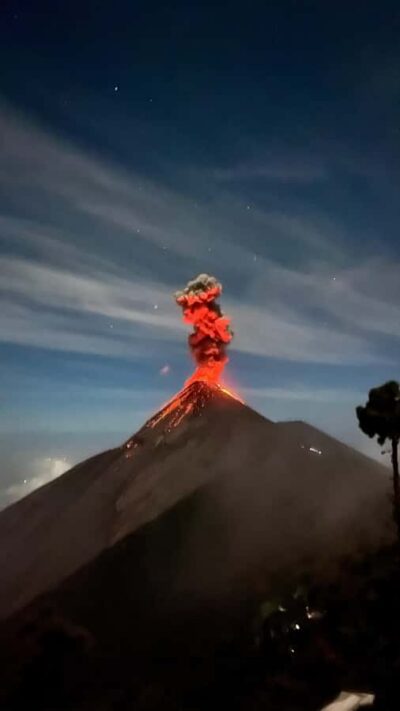
2-Day Acatenango Volcano Hike w/Local Guide & Meals
Read our review →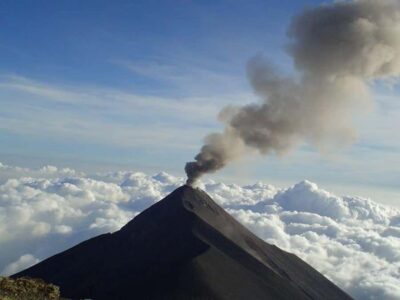
Acatenango Volcano Overnight Hike 2-Day Camping &Fuego Views
Read our review →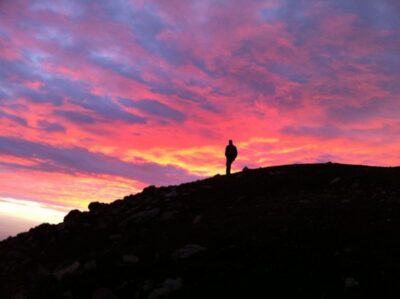
2-day tour from Antigua 1 night in Acatenango Volcano
Read our review →Browse the lists this tour appears in