
Reviewed · ANTIGUA GUATEMALA TOURS
Antigua: Villages Tour on Chicken Bus
Antigua’s cobbled center is beautiful, but this half-day outing shows you what lies beyond it. You ride a colorfully painted Guatemalan chicken bus to farming villages, family workshops, and a macadamia plantation, with a guide explaining the people, faith, food, and work that shape the area.
I like the mix of hands-on stops and open countryside. Warm chocolate tasting, loquat wine and preserves, volcano views, and macadamia products give the day plenty of flavor. I also like that guides such as JJ, Esteban, Felix, and Diego are praised for answering questions and adjusting the pace. The main catch is that the bus is reserved for the tour, so you get the look and feel of a chicken bus without sharing a normal local route with villagers.
Key points to know before booking
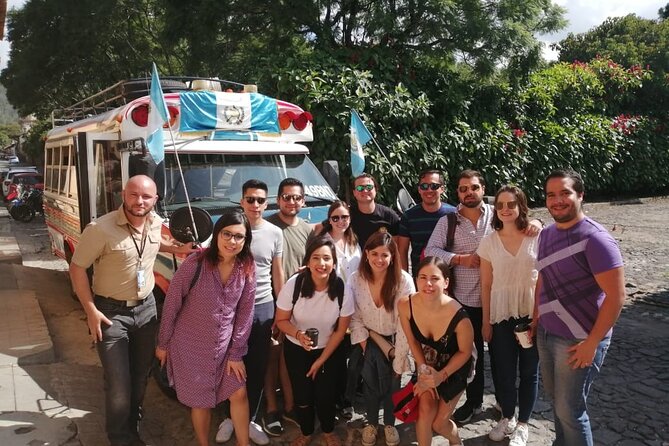
- A former public chicken bus: You ride a genuine colorful Guatemalan bus now used exclusively for this excursion, not a standard public bus.
- Three main stops: San Juan del Obispo, San Pedro Las Huertas, and Valhalla Experimental Station each receive about one hour.
- Family-run food traditions: Learn how cacao becomes chocolate and how loquat becomes wine, jam, and preserves.
- Strong guide element: JJ, Esteban, Felix, Diego, Katy, and others have been praised for clear English, local knowledge, humor, and personal attention.
- A small-group outing: The maximum is 15 people, with bottled water, snacks, entrance fees, and a bilingual guide included.
- Lunch is separate: The price is $95 per person, but you need to pay for lunch yourself if you want a full meal.
Why this is a good break from Antigua’s cobblestones
Antigua is easy to explore on foot, but its surrounding villages are not. The roads quickly leave the restored colonial center and pass farmland, small communities, volcano views, and workshops that would take effort to reach on your own. This tour gives you that wider view without asking you to arrange separate taxis or figure out village transport.
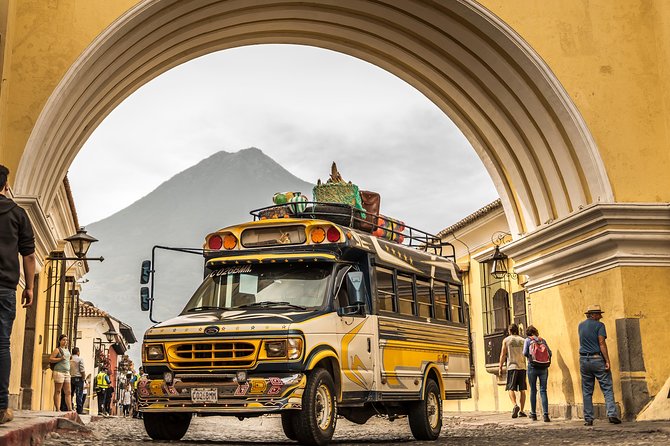
The bus is part of the fun. Guatemalan chicken buses are often retired North American school buses, repainted in bright colors and adapted for local routes. Here, the vehicle is a real former chicken bus, but it is reserved for the group. That makes the ride more comfortable and simple than public transport, though it also means you will not have the everyday social contact of a regular village bus.
I see the tour as a cultural sampler rather than a deep study of one town. You will not spend a full day in any single village. Instead, you get several windows into local life: chocolate making, fruit processing, colonial village design, farming, handmade goods, and sustainable agriculture.
The excursion lasts about five to six hours. The listed meeting time is 8:30 a.m. at Casa de la Mandarina on 2a Calle Poniente. The activity returns to that meeting point, though one account describes a drop-off at a preferred location, so it is worth asking about this before setting your plans.
Other Antigua Guatemala days worth booking alongside this:
- From Antigua: Adventure, 2-Day Hiking to Acatenango Volcano
★ 4.4 · 1,189 reviews - From Antigua: Pacaya Volcano Tour in English/Spanish
★ 4.5 · 930 reviews - From Antigua: Pacaya Volcano Trek
★ 4.4 · 798 reviews
San Juan del Obispo: chocolate, loquat, and a broad valley view
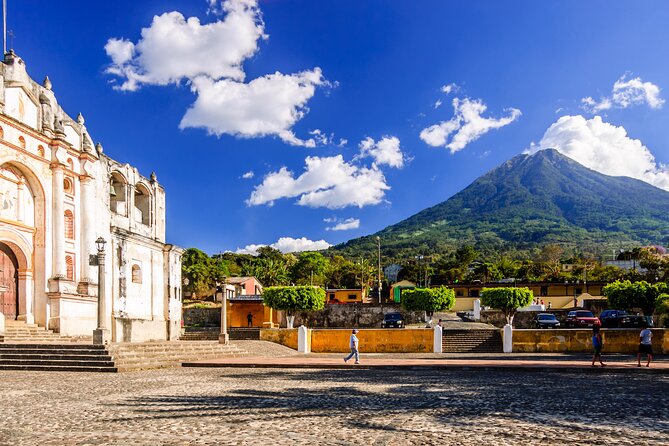
The first stop is San Juan del Obispo, a village with a plaza and wide views across the valley. This is a fine opening because you begin with place rather than products. Pause in the plaza and look at how the settlement sits among farms and volcano country.
The chocolate visit is family-owned and has continued for more than five generations. You learn how cacao is handled and turned into Guatemala’s much-loved chocolate drink, then sample it warm. This is not just a quick shop stop. The value comes from seeing a food tradition in a household-scale setting and tasting the result while the process is still fresh in your mind.
Just around the corner is a loquat museum and workshop. Loquat is a golden fruit that is turned into wine, jams, and preserves, with the village’s own versions available to sample. This stop adds something different to the chocolate visit. You are not only seeing a familiar product in a new form, you are also learning how a local fruit can support a small family business.
You should expect tasting opportunities to be modest rather than a full meal. Snacks and bottled water are included, but lunch is not. If you have a large breakfast, the morning should be manageable. If you tend to get hungry early, ask the guide about food options during the day.
San Pedro Las Huertas: village streets and volcano views
San Pedro Las Huertas is known as a farming community. Its name points to vegetable gardens, and the area has long been associated with tomatoes, beans, and lettuce. The stop gives you a chance to walk rather than simply look out of a bus window.
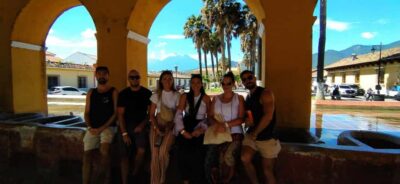
The village plaza includes a traditional communal washing area, with several places where local residents can access water and wash clothing. These shared sinks are practical pieces of community life, and they help you see how a public space can serve more than one purpose.
On the eastern side of the plaza is a Baroque Spanish colonial church. You get the contrast that makes the surrounding villages so worthwhile: working agricultural life beside an ornate religious building, all under the volcanoes. Views toward Fuego and Agua can provide the day’s best photographs, though visibility naturally depends on weather and cloud cover.
A jade factory may be added if everyone in the group agrees. Treat this as a possible extra, not a guaranteed stop. The same applies to other local workshops that appear in some versions of the outing, including textiles, coffee, or family food experiences. Ask your guide at the start what the day’s exact plan includes.
That flexibility can work in your favor. Guides have adjusted the order of stops, made photo breaks, answered family questions, and offered local restaurant suggestions. It can also mean the experience is not identical for every group. If a specific workshop matters to you, confirm it rather than assuming it is part of every departure.
Passing the first Spanish capital and its farmland
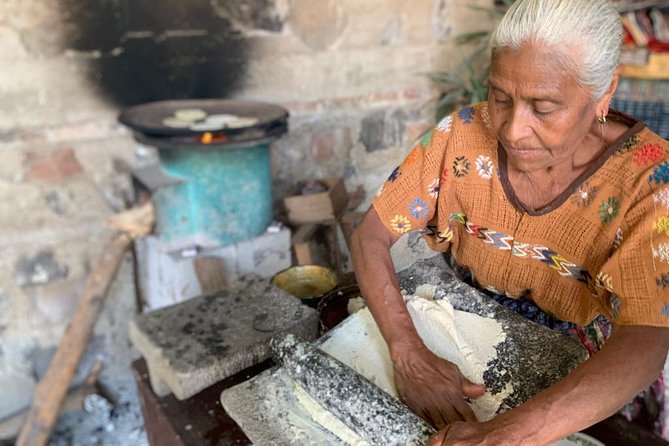
Between village stops, the bus passes through the area associated with the first capital of the Spanish Crown in the Americas. The route also opens onto farmland where flowers and vegetables are grown for local and international markets.
This drive is easy to underestimate. It is not a formal sightseeing stop with an entrance gate, but it connects the villages to the wider economy. You see that Antigua is not an isolated colonial showpiece. The surrounding communities grow food, raise products, maintain family enterprises, and supply markets well beyond the valley.
Keep your camera ready, but also listen to the guide. The route is one of the places where local explanation adds the most value. A road through fields can look like a simple transfer if you are alone. With context about crops, communities, and the area’s past, it becomes part of the story.
Same highlands, a completely different day out:
- Antigua, Guatemala: Volcano Acatenango Overnight Hiking
★ 4.6 · 645 reviews - Hike to Pacaya Volcano from Antigua
★ 4.5 · 502 reviews - Antigua Guatemala: City Highlights Guided Walking Tour
★ 5.0 · 462 reviews - FROM ANTIGUA, ROUND TRIP: EXPLORING THE VILLAGES OF LAKE ATITLÁN.
★ 4.6 · 382 reviews
Valhalla Experimental Station: macadamias with a purpose
The final major stop is Valhalla Experimental Station, an organic macadamia farm. The visit lasts about an hour and focuses on the farm’s sustainable work and its role in supporting Indigenous communities.
You learn about the environmental benefits of macadamia trees and the many uses of the nut. The presentation covers skin care, food, and medicine, showing how one crop can support more than a single product line. This is also a useful stop for understanding the connection between conservation, farming, and income.
The macadamia farm has received especially strong attention from people who enjoyed the mix of practical information and scenery. I can see why. Chocolate and fruit preserves are easy pleasures, but the farm adds a larger question: how can agricultural projects create steady work while caring for the land?
You may see products for sale, but the tour’s design does not require you to buy anything. That matters. You can learn about the operation and support the community through the visit without treating every stop as a sales appointment. Still, bring room in your budget if you want to purchase chocolate, loquat products, jade, textiles, coffee, or macadamia goods.
Guides make or break the experience
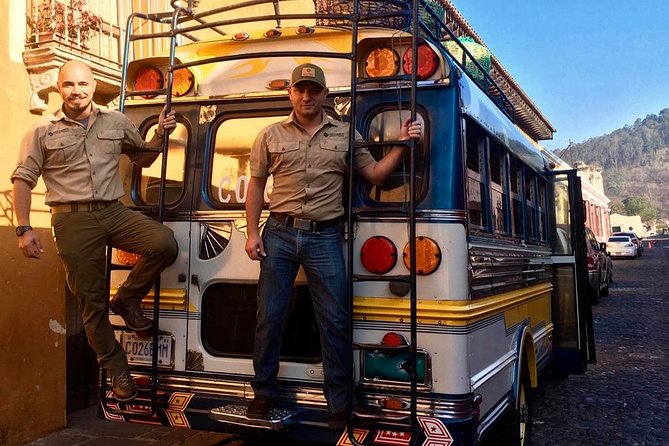
The strongest part of this outing is the guide. The company has used several guides, including Juan Jesus, often called JJ, along with Esteban, Felix, Diego, Katy, and Michael. You cannot select a particular person unless the company confirms it, but the guide’s role is central to the day.
JJ is praised for explaining culture, religion, local history, and the practical side of village life. Esteban is noted for adjusting the schedule and helping with food and local suggestions. Felix has been described as especially good with families, including children, and as a helpful source for restaurant and activity advice.
That personal approach can turn a standard route into a better day. Guides have stopped for an unplanned snack, helped arrange local calls, taken photographs, and shifted the order of visits when needed. These small acts are useful when you are trying to get a feel for a place rather than simply checking off stops.
The tour is bilingual, and most people can participate. Service animals are allowed, and the meeting point is near public transportation. The provided information does not describe exact bus steps, road surfaces, or restroom access at every stop, so ask in advance if mobility is a concern.
The chicken bus question: authentic vehicle, private ride
The name raises an important expectation. If you picture squeezing onto a public bus with local commuters, this is not that experience. The bus is a genuine former village bus, but the company uses it only for tour groups. You will not be sharing the ride with residents or following one continuous public route.
There is a practical reason. The villages on this route are not linked by one simple bus service. Using regular buses would require waiting and changing vehicles, with much of the half-day lost to transport. The private bus lets you cover more ground and reach several communities in one morning.
I consider this a reasonable compromise. You get the decorated vehicle, the feel of local bus design, and a much easier route. But the tour should not be sold to you as a complete public-transport experience. If meeting local people on their daily commute is your main goal, take a normal chicken bus separately with proper local advice.
For most people, the bus is a lively way to connect the stops. It also gives the group a shared setting, which can make the day feel more social without requiring a large coach.
What $95 includes, and where the value lies
At $95 per person, this is not the cheapest way to see the villages. You are paying for private transport, a bilingual guide, bottled water, snacks, taxes, and entrance fees. The maximum group size is 15, so the vehicle and guiding should feel more personal than a large sightseeing bus.
The value depends on how much planning you want to avoid. Hiring separate transport to three villages, finding the family businesses, arranging tastings, and learning the local background could take more time and cost more than expected. The tour bundles those pieces into one morning and removes the language and route-planning burden.
Lunch is not included. That is the clearest extra cost to remember. Some days may include a chance to stop for food, and guides have suggested local places, but you should not assume a meal is part of the $95 price.
The possible jade visit and other workshop additions also deserve a question before booking. If you prefer a fixed schedule, ask exactly what is planned for your date. If you like some flexibility, the guide-led format can be a benefit.
Who will enjoy this outing most
I would choose this for someone spending several days in Antigua who wants more than churches, ruins, and cafés. It is also a strong first activity in Guatemala because it gives you early contact with food traditions, rural communities, farming, and local history.
Families can do well here. The experience is varied enough to hold a child’s attention, and one guide was specifically praised for being attentive to a three-year-old. The five to six-hour length is still worth considering for young children, especially since the day includes bus time and walking.
Couples and friends will appreciate the combination of scenery, tastings, and conversation. Solo visitors can also fit in easily, especially with a maximum of 15 people, though the social feel will depend on the group size that day.
This is less suited to someone seeking a strenuous outdoor excursion, a long food tour, or a fully spontaneous public-bus adventure. It is also not the best choice if you want to spend hours at one museum or archaeological site. The strength here is variety and access.
Useful details for planning your day
Book ahead if your dates are fixed. The experience is booked an average of 27 days in advance, which suggests that popular travel periods can fill early.
The listed start time is 8:30 a.m., and the tour ends back at Casa de la Mandarina. The overview also refers to morning or afternoon choices, so confirm the available departure when booking rather than relying on one general description.
Wear shoes suitable for village streets and short walks. The supplied information does not state a dress code, but respectful clothing is sensible around the colonial church and community spaces.
Bring some spending money if you might want local products. Purchases are optional, and one account specifically noted no pressure to buy, but chocolate, jade, loquat products, textiles, coffee, and macadamias may tempt you.
Free cancellation is available up to 24 hours before the start time for a full refund. Changes or cancellations inside that window are not accepted for a refund, and the company may offer another date or a full refund if the minimum number needed to operate is not reached.
Should you book the Antigua villages chicken bus tour?
Book it if you want an easy, well-guided look at everyday communities beyond Antigua. The best reasons are the excellent guide element, the family-run chocolate and loquat stops, the volcano views at San Pedro Las Huertas, and the macadamia farm’s environmental focus.
Think twice if your idea of a chicken bus ride requires public transport and local passengers. This is a private tour vehicle, not a normal commuter route. At $95, the outing makes the most sense when you value transport, interpretation, several tastings, and a carefully connected half-day more than a bargain bus fare.
For most visitors with limited time, I would book it, then confirm the departure time, the likely guide, the jade stop, lunch arrangements, and the exact bus setup before paying. That small check will help you arrive with the right expectations and enjoy what the tour does best: showing you the working villages and small producers that a walk around Antigua cannot reach.
FAQ
Where does the tour begin?
The meeting point is Casa de la Mandarina, 2a Calle Poniente 2, Antigua Guatemala 03001.
What time does the tour start?
The listed start time is 8:30 a.m. The overview also refers to morning or afternoon options, so confirm the available time for your booking.
How long does the experience last?
The tour lasts approximately five to six hours.
Where does the tour end?
The standard ending point is back at the meeting point.
Is lunch included?
No. Lunch is not included in the $95 price.
What is included in the price?
The price includes all fees and taxes, bottled water, snacks, and a bilingual tour guide.
How many people can join the tour?
The activity has a maximum of 15 participants.
Just added around Antigua Guatemala
- Tour hacia Hobbitenango en quad★ 4.9 · 11 reviews
- Hobbitenango & Antigua Shared Day Tour★ 5.0 · 4 reviews
- Sky high ATV adventure★ 4.7 · 19 reviews
- One-day tour from Antigua to Lake Atitlán★ 4.6 · 5 reviews
- From Antigua to Sumpango Giant Kite Festival★ 4.2 · 7 reviews
- From Antigua Guatemala: Birdwatching and Scenic Hiking Tour★ 4.2 · 9 reviews
- From Antigua: 2-Day Tour of Chichicastenango & Lake Atitlan★ 3.4 · 7 reviews
- From Guatemala City, Tour to Antigua Guatemala★ 4.5 · 3 reviews
Antigua Guatemala Tours, compared.

Adventure, 2-Day Hiking to Acatenango Volcano
Read our review →
Antigua, Guatemala: Volcano Acatenango Overnight Hiking
Read our review →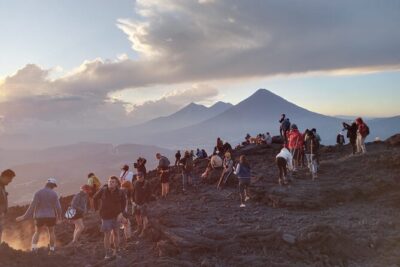
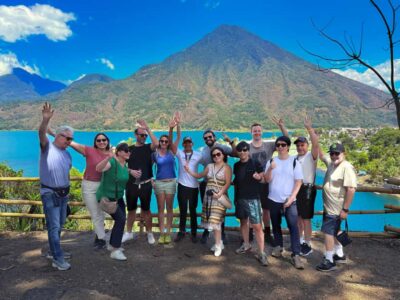
FROM ANTIGUA, ROUND TRIP: EXPLORING THE VILLAGES OF LAKE ATITLÁN.
Read our review →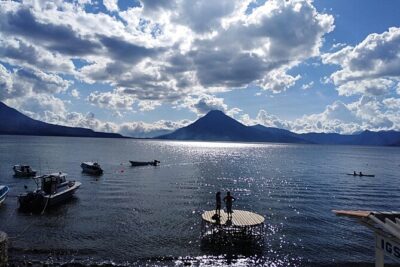
Browse the lists this tour appears in