
Reviewed · ANTIGUA GUATEMALA TOURS
Chocolate workshop; gastronomic experience of cocoa.
The best part of this Antigua workshop is that you do not simply taste finished chocolate. You handle the cacao yourself, moving from bean to bar through roasting, shelling, grinding, and molding. Along the way, you learn why cacao mattered to the Maya and how Guatemalan aroma cacao changes at each stage.
I like the hands-on work and the fact that your final chocolate bar is yours to take home. I also like the small, private format, which gives the instructor room to adjust explanations. The main consideration is language: instruction is in Spanish, though Ingrid has patiently helped non-Spanish-speaking families, and written information plus Google Translate worked well for one English-speaking couple.
Key points at a glance
- From whole cacao bean to chocolate bar: You sort, roast, shell, grind, and form the chocolate yourself.
- A Mayan introduction: The session explains the origin, importance, and historic uses of cacao during Maya times.
- Five-senses tasting: You sample the aroma and flavor of cacao as it passes through different processes.
- A convenient Antigua location: The workshop is one block from Parque Central, at 6a Avenida Norte 6.
- Spanish instruction in a private group: Instructors including Ingrid, Andrea, and Bea have led sessions, with help available for translation.
- Good value for chocolate fans: The $32 price includes materials, tastings, and your finished bar, plus a 5 percent store discount.
From Maya cacao to your own chocolate bar
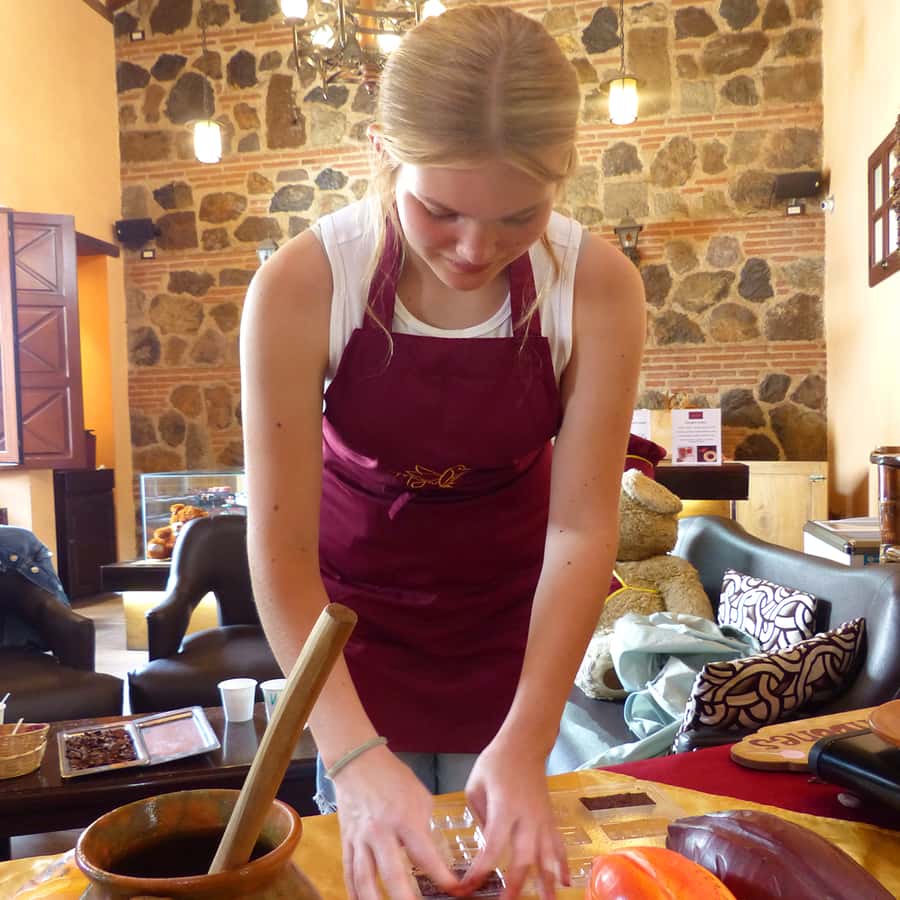
This is a short workshop with a clear purpose: to show you how cacao becomes chocolate, then let you do the work. It takes place in Antigua Guatemala, in the Sacatepéquez Department, at Maya Cacao Chocolates.
You begin with context rather than equipment. The instructor explains cacao in Maya times, including its origin, importance, and uses. That opening matters because it gives the ingredient a place in Guatemalan culture before you start tasting it.
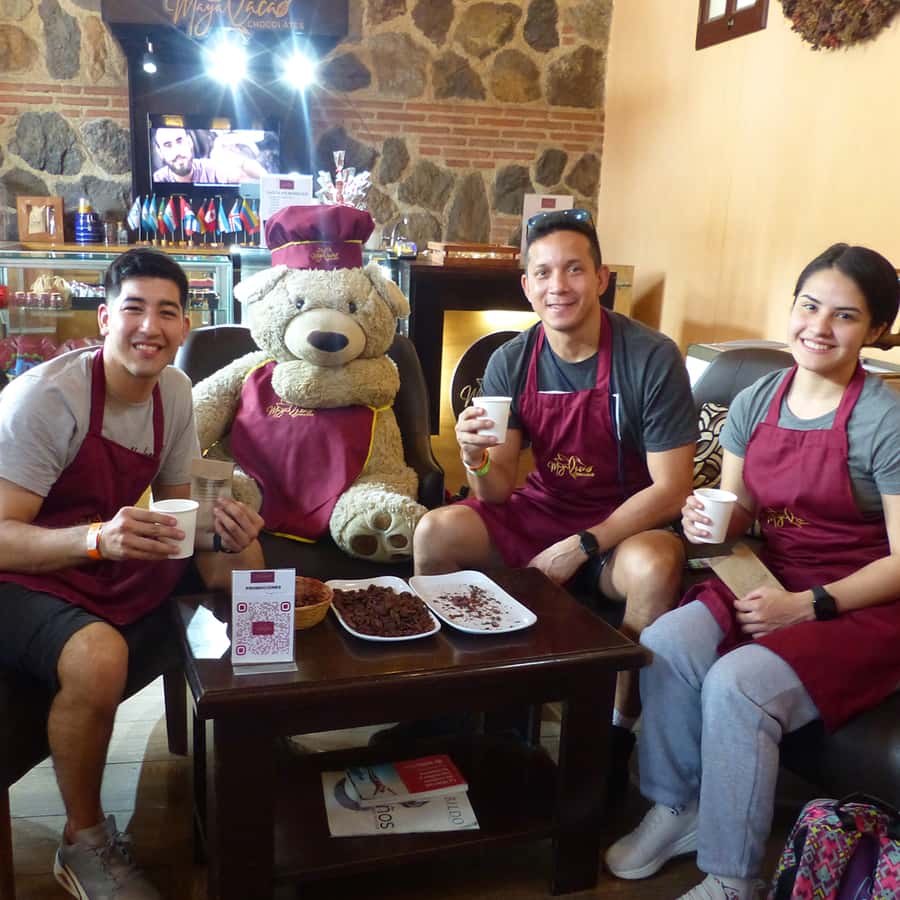
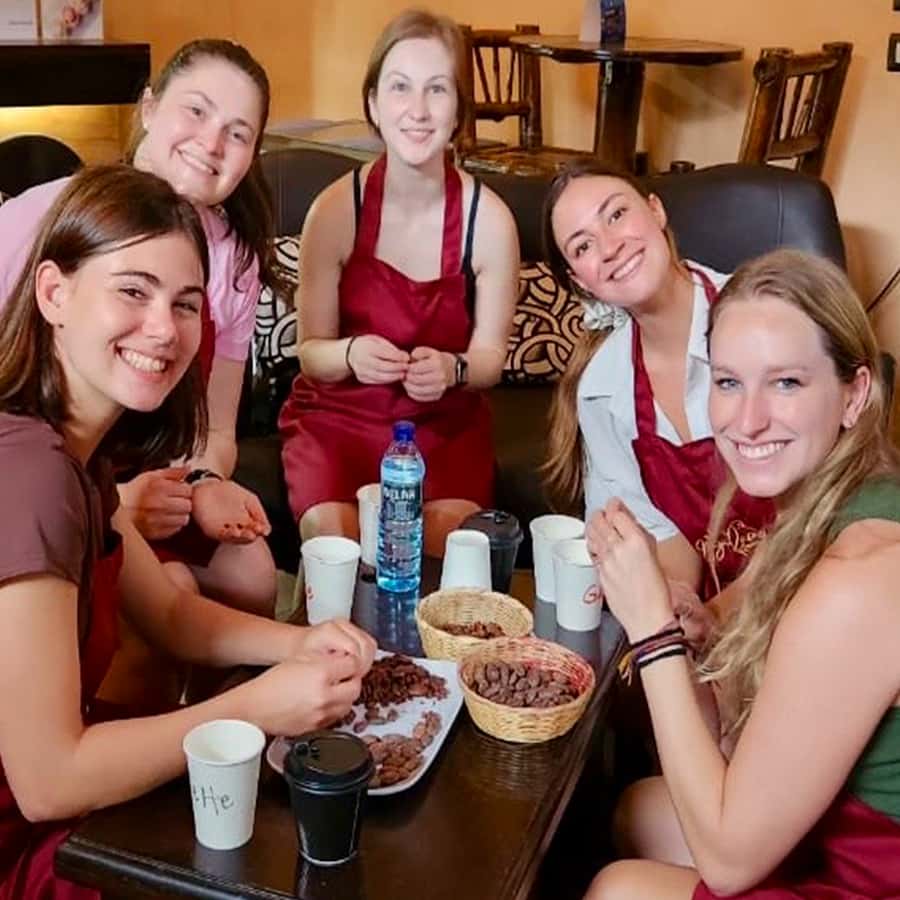
Then the workshop turns practical. You use your senses to compare cacao through several stages. You smell it, taste it, and watch how the texture changes as you work. The experience is not a formal cooking class with a long list of recipes. It is a focused look at one ingredient, handled from its early form through the finished chocolate.
The whole workshop lasts about 1.5 hours. The activity information also describes it as valid for one day, which refers to the booking date and available starting time, not to a full day of instruction. Plan on a compact session rather than an all-day outing.
Other Antigua Guatemala days worth booking alongside this:
- From Antigua: Adventure, 2-Day Hiking to Acatenango Volcano
★ 4.4 · 1,189 reviews - From Antigua: Pacaya Volcano Tour in English/Spanish
★ 4.5 · 930 reviews - From Antigua: Pacaya Volcano Trek
★ 4.4 · 798 reviews
Finding the mustard-colored house near Parque Central
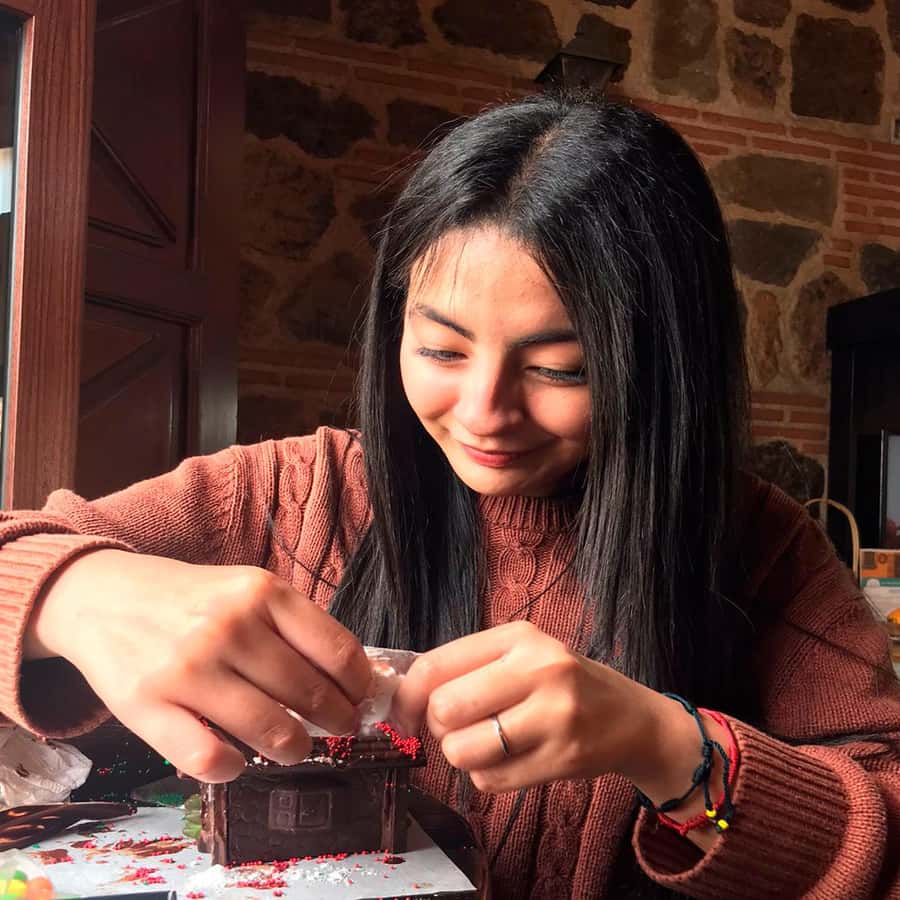
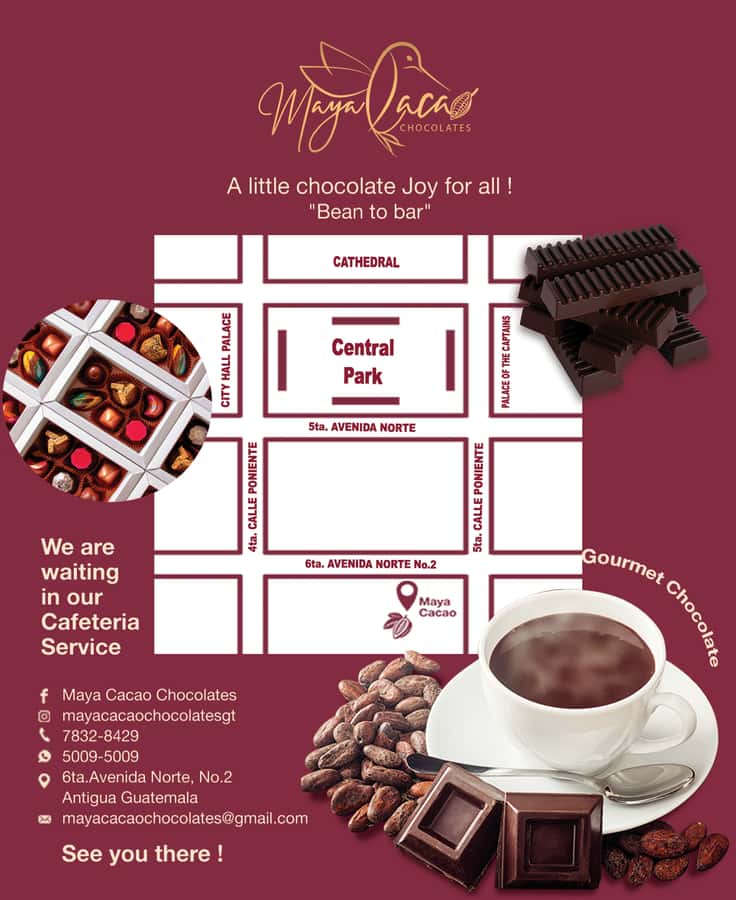
The meeting point is at 6a Avenida Norte 6, about one block from Antigua’s Parque Central. You are looking for a mustard-colored house. At the door, a teddy bear serves as the welcome sign and helps make the otherwise ordinary address easier to spot.
This central location is useful if you are already walking around Antigua. You do not need to arrange transport to a distant farm or factory, and the workshop can fit neatly into a day of sightseeing. The tradeoff is that this is an urban chocolate experience, not a cacao plantation visit. You will learn about processing and taste the ingredient, but no farm visit or bean-growing tour is part of the activity.
One practical point deserves attention: the location directions have not been perfectly clear for everyone. Give yourself a few extra minutes, and use the mustard-colored house and teddy bear as your main visual clues.
The site is wheelchair accessible, which makes this a more workable choice for many visitors with mobility needs. The activity is not suitable for children under seven.
Learning why cacao mattered to the Maya
The historical introduction helps turn a familiar sweet into something more meaningful. Cacao was important in Maya culture, and the workshop explains its role and uses before asking you to work with the beans.
The information provided does not promise a long lecture, museum collection, or archaeological visit. Expect a practical introduction tied to the food in front of you. That is a good fit if you want cultural context without spending an hour listening to a broad history talk.
I find this balance useful. You get enough background to understand why cacao matters in Guatemala, then move quickly to the part most people came for: smelling, tasting, roasting, and making chocolate.
The instruction is in Spanish. That is the clearest limitation for English speakers, but it is not necessarily a dealbreaker. Ingrid has worked patiently with a family that did not speak Spanish, and Andrea led another session where a couple used Google Translate and written information to follow along. If you speak little Spanish, bring your phone with a translation app and expect a more visual, hands-on class.
Depending on the session, you may meet Ingrid, Andrea, or Bea. The information available about these instructors points to a friendly, adaptable teaching style. Bea, in particular, adjusts her explanations as needed. Still, because Spanish is the stated language, do not book this expecting a fully English-led class.
Using your five senses on Guatemalan aroma cacao
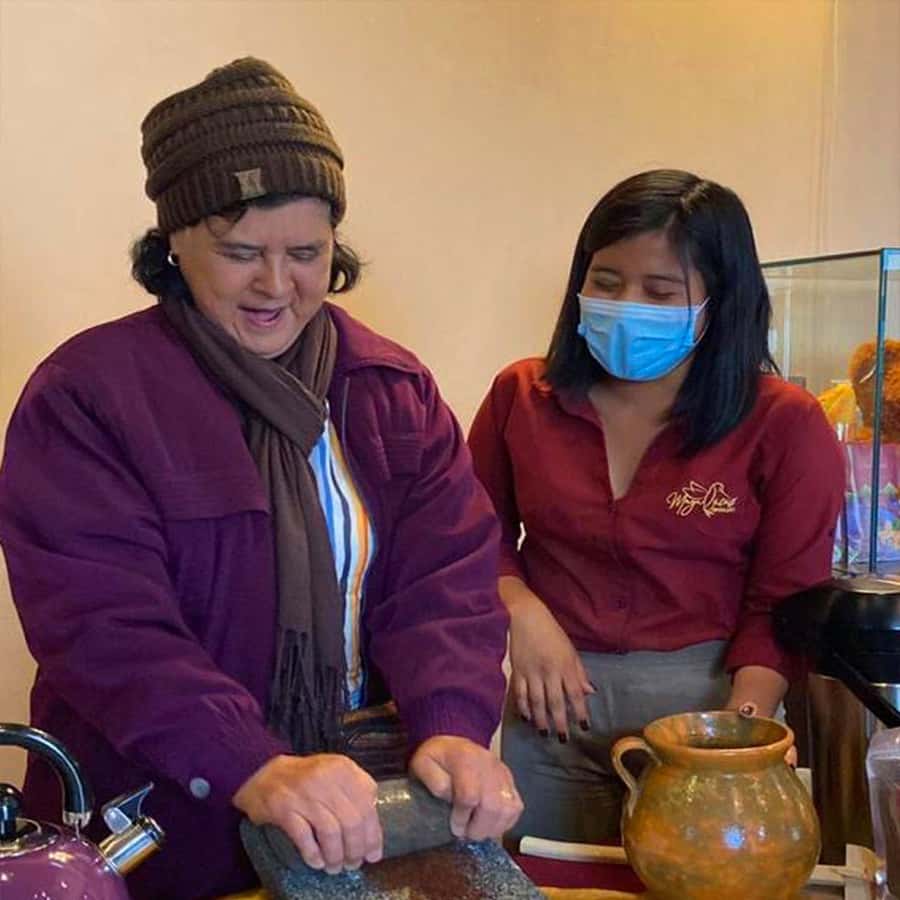
The tasting is not just a final bite of chocolate. You work through the flavor and aroma of cacao in its different processes, which lets you notice the ingredient before sugar and finished-bar texture take over.
You can expect to smell and taste the cacao as it changes. This is the part that gives the workshop its gastronomic angle. Instead of treating chocolate as one fixed flavor, the session shows you how roasting, removing the shell, and grinding affect what you experience.
The word aroma is central here. Guatemalan aroma cacao is the focus, and the workshop invites you to pay attention to scent as much as sweetness. If you usually eat chocolate quickly, this slows the process down and gives you a reason to notice what is in your mouth and under your nose.
The experience also suits different ages within a family. Children under seven cannot join, but older children can take part in simple food preparation with adult supervision. Since the class is private, your group can likely move at a comfortable pace, though the exact teaching style depends on the instructor.
A few more Antigua Guatemala trips to weigh up
- Antigua: Cooking Class with Local Family
★ 5.0 · 6 reviews - Lake Atitlan Maya Kitchen: 3-Hour Cooking Class
★ 4.8 · 17 reviews - El Paredón: Traditional Cooking Class with a Local Family
★ 4.8 · 4 reviews
Roasting, shelling, and grinding the beans
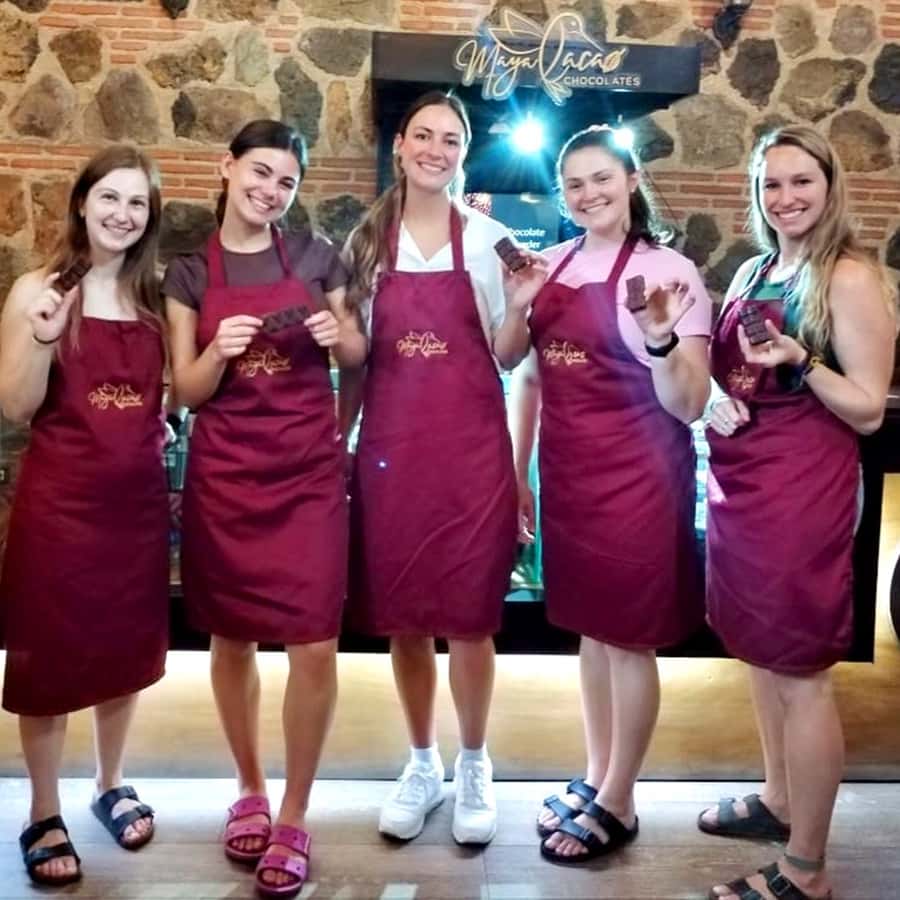
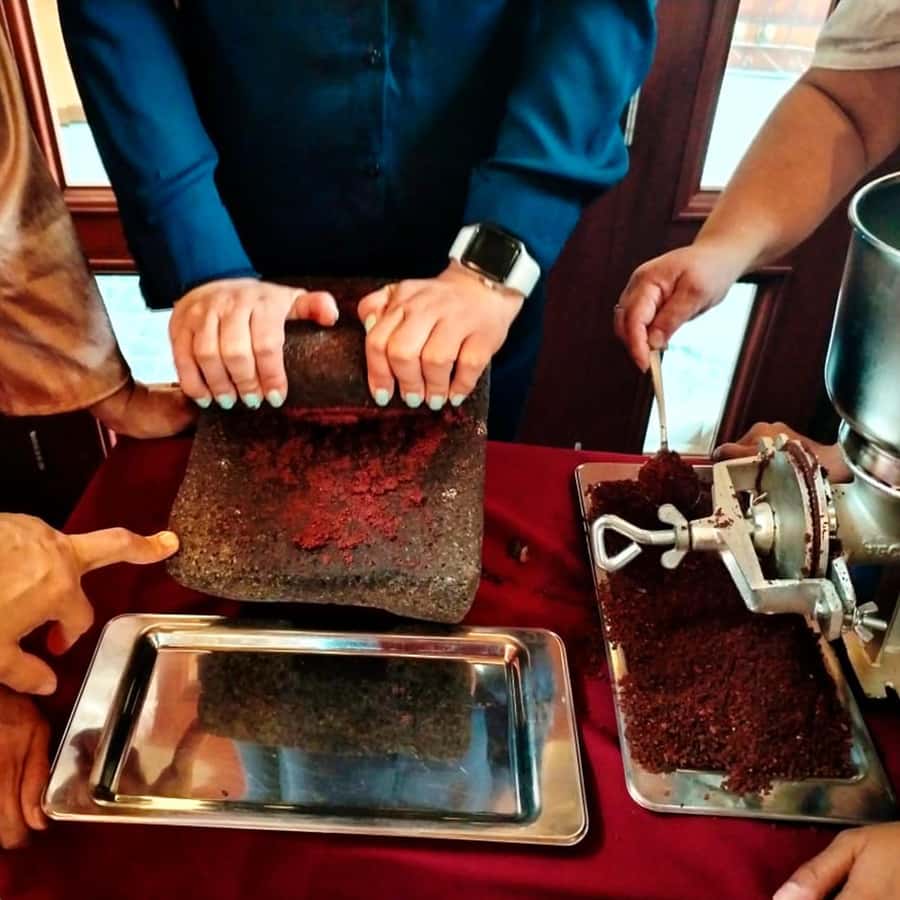
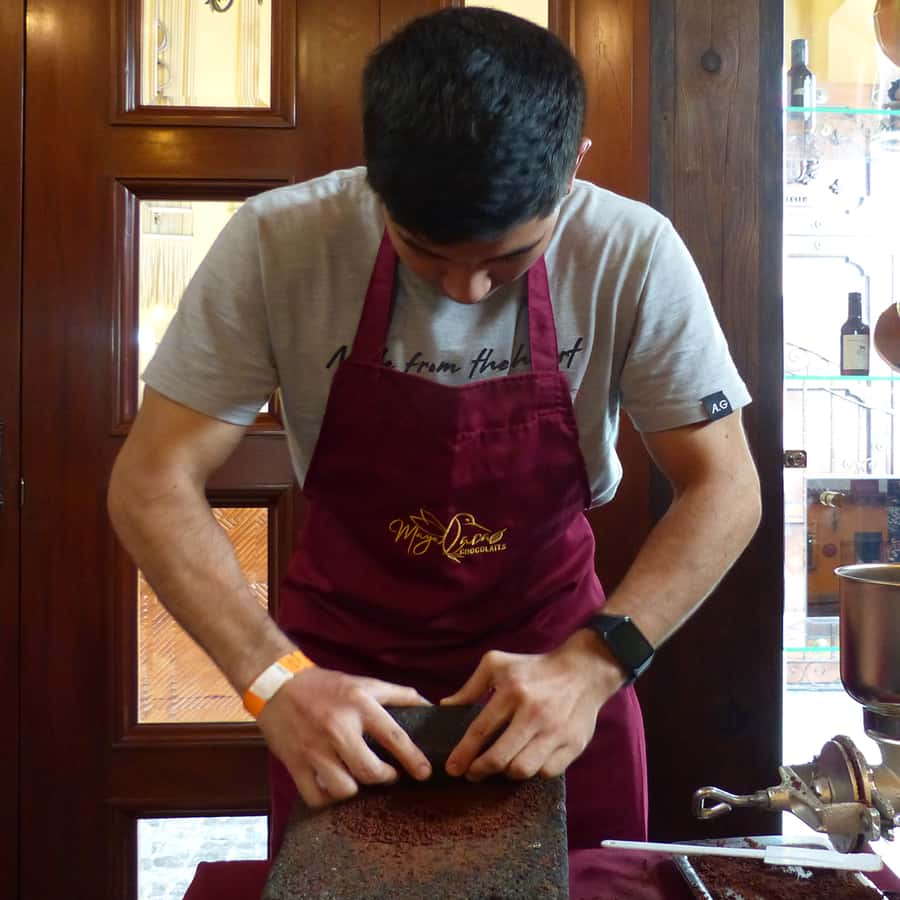
The most memorable section is the work itself. You learn to roast your cacao, remove the shells, and grind the beans. These steps give you a direct sense of how much work comes before the smooth bar sitting in a shop window.
Roasting is where the aroma becomes especially important. The process changes the beans and prepares them for the next step. Shelling then separates the useful cacao from the outer covering. Grinding turns the prepared beans into a more workable chocolate mixture.
You are not watching a specialist do everything behind a counter. You participate from start to finish. That distinction makes the $32 price easier to understand. The fee covers materials and tastings, but you are also paying for instruction, guided handling, and a finished item connected to the work you just completed.
The workshop does not claim to teach professional chocolate production or advanced confectionery skills. You should think of it as an introduction to cacao processing. It is enough to help you understand the basic path from bean to bar, not a course for opening a chocolate business.
Molding the bar and taking it home
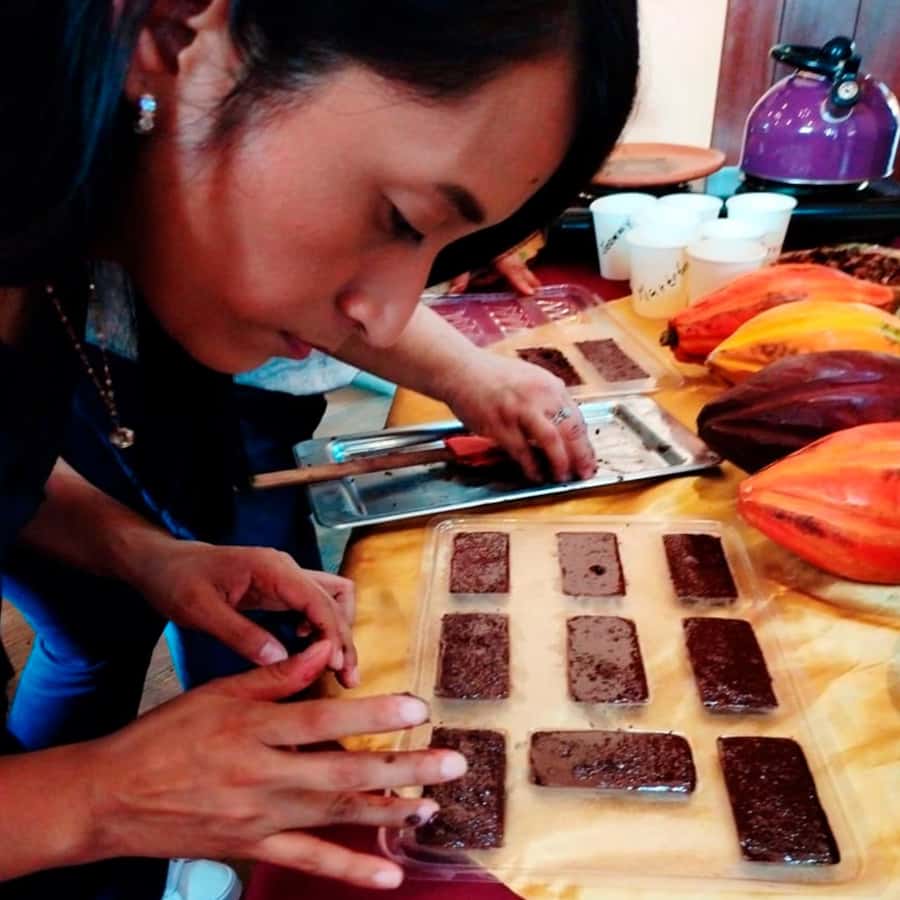
At the end, you form your own chocolate bar. This gives the session a useful finish: you leave with something you made instead of only a memory or a tasting note.
The included bar is also a simple souvenir of Guatemala. It carries more meaning than a packaged bar purchased at a shop because you have sorted, roasted, shelled, and ground the cacao yourself. The process makes the final taste feel connected to the place and the ingredient.
One detail may matter to shoppers. You receive a 5 percent discount on the entire store after the experience. The information does not specify which products are available or how long the discount lasts, so ask at the shop if you plan to buy additional chocolate.
The finished chocolate is described as high quality and without preservatives. Since the exact recipe and ingredients are not specified, check with the instructor if you have allergies or dietary concerns. Do not assume the bar meets a particular diet unless the staff confirms it.
Is $32 a fair price?
At $32 per person, this is not the cheapest chocolate tasting in town, but it offers more than a sample flight. Materials, tastings, instruction, and your own chocolate bar are included.
The value is strongest if you enjoy participating. You are paying for a structured activity that occupies roughly 1.5 hours and gives you several tasks to complete. If you only want to eat chocolate, a shop visit will cost less and take less time. If you want to understand how cacao is handled and leave with a handmade bar, the price is reasonable.
The private-group format also affects the value. You are not simply standing in a large crowd while an instructor repeats the same speech. A private booking can work well for families, couples, and small groups who want to ask questions or use translation help without holding up strangers.
The 5 percent store discount adds a small extra benefit, though it should not be the reason you book. The main value comes from the process and the personal bar.
Who will enjoy this Antigua workshop?
I would choose this activity for chocolate fans, families with children seven and older, couples looking for a short indoor activity, and anyone who likes learning through touch and taste. It is also a good option when you want a break from Antigua’s churches, streets, and viewpoints without leaving the center.
It suits you especially well if you appreciate food with cultural context. The Maya introduction, Guatemalan cacao focus, and hands-on processing connect the final chocolate to more than dessert.
You may want to skip it if you need English instruction, dislike food preparation, or expect a farm-to-table tour in the countryside. The stated language is Spanish, the workshop takes place in Antigua, and the activity does not include transport or a plantation visit.
For families, the private format is helpful. Older children can follow the bean-to-bar sequence and take pride in forming their own chocolate. Very young children are not allowed, so check the age rule before booking a family group.
Booking, timing, and practical details
You can cancel up to 24 hours before the experience for a full refund. You can also reserve now and pay later, which helps if your Antigua schedule is still changing. Starting times vary, so check availability for your chosen date.
The activity is offered as a private group. The available information does not give a maximum group size, so ask the provider if you have a larger party or need a specific arrangement.
Materials and tastings are included, as is the chocolate bar you make. There is no mention of hotel pickup, transportation, or meals, so plan to reach the central meeting point on your own and do not treat this as a full-day food tour.
The workshop is wheelchair accessible. Since cacao handling can be practical and hands-on, you may still want to contact the provider ahead of time about the exact setup if someone in your group has specific mobility needs.
Should you book Maya Cacao Chocolates?
Book it if you want an active chocolate experience rather than a quick tasting. The strongest reasons are the clear bean-to-bar process, the Maya background, the private setting, and the chocolate bar you make and take home.
I would be more cautious if no one in your group can manage Spanish or use a translation app. The instructors have helped non-Spanish speakers, but Spanish remains the official language. Also remember that the workshop is in central Antigua, not at a cacao farm.
For $32, you get a focused 1.5-hour activity with materials, tastings, and a personal souvenir. That is solid value for a family, couple, or small group that wants to do something with its hands. If chocolate is a major reason you are visiting Guatemala, this is an easy addition to your Antigua plans.
FAQ
Where does the chocolate workshop take place?
It takes place at Maya Cacao Chocolates, at 6a Avenida Norte 6 in Antigua Guatemala, in Guatemala’s Sacatepéquez Department.
How far is the meeting point from Parque Central?
The meeting point is one block from Parque Central in Antigua.
How will I recognize the entrance?
Look for a mustard-colored house on 6a Avenida Norte. A teddy bear at the door welcomes participants.
How long does the workshop last?
The workshop lasts about 1.5 hours.
What will I do during the experience?
You learn about cacao in Maya times, taste and smell cacao at different stages, roast and shell the beans, grind the cacao, and form your own chocolate bar.
Is the chocolate bar included?
Yes. Materials, tastings, and the chocolate bar you make are included in the price.
What language is the workshop in?
The instructor teaches in Spanish. Written information and translation apps may help non-Spanish speakers.
Is the activity private?
Yes. The activity is offered as a private group.
Are children allowed to participate?
Children under seven are not permitted to join the activity.
Is the workshop wheelchair accessible?
Yes, the activity is listed as wheelchair accessible.
What is included in the $32 price?
The $32 price per person includes the workshop materials, tastings, and your handmade chocolate bar.
Is there a discount after the workshop?
Yes. You receive a 5 percent discount on the entire store.
Just added around Antigua Guatemala
- Tour hacia Hobbitenango en quad★ 4.9 · 11 reviews
- Hobbitenango & Antigua Shared Day Tour★ 5.0 · 4 reviews
- Sky high ATV adventure★ 4.7 · 19 reviews
- One-day tour from Antigua to Lake Atitlán★ 4.6 · 5 reviews
- From Antigua Guatemala: Birdwatching and Scenic Hiking Tour★ 4.2 · 9 reviews
- From Antigua to Sumpango Giant Kite Festival★ 4.2 · 7 reviews
- From Antigua: 2-Day Tour of Chichicastenango & Lake Atitlan★ 3.4 · 7 reviews
- From Guatemala City, Tour to Antigua Guatemala★ 4.5 · 3 reviews
Antigua Guatemala Tours, compared.
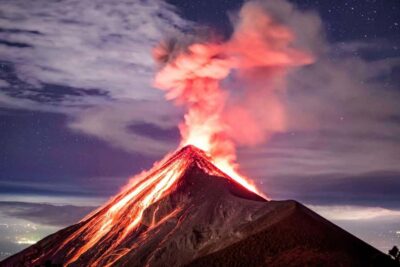
Adventure, 2-Day Hiking to Acatenango Volcano
Read our review →
Antigua, Guatemala: Volcano Acatenango Overnight Hiking
Read our review →
FROM ANTIGUA, ROUND TRIP: EXPLORING THE VILLAGES OF LAKE ATITLÁN.
Read our review →
Browse the lists this tour appears in